End-to-end product ownership, from scraping to interface and final output.
BackMy role Challenge Observed outcome
Next Project
SOL-e - Automated Reference Extractor
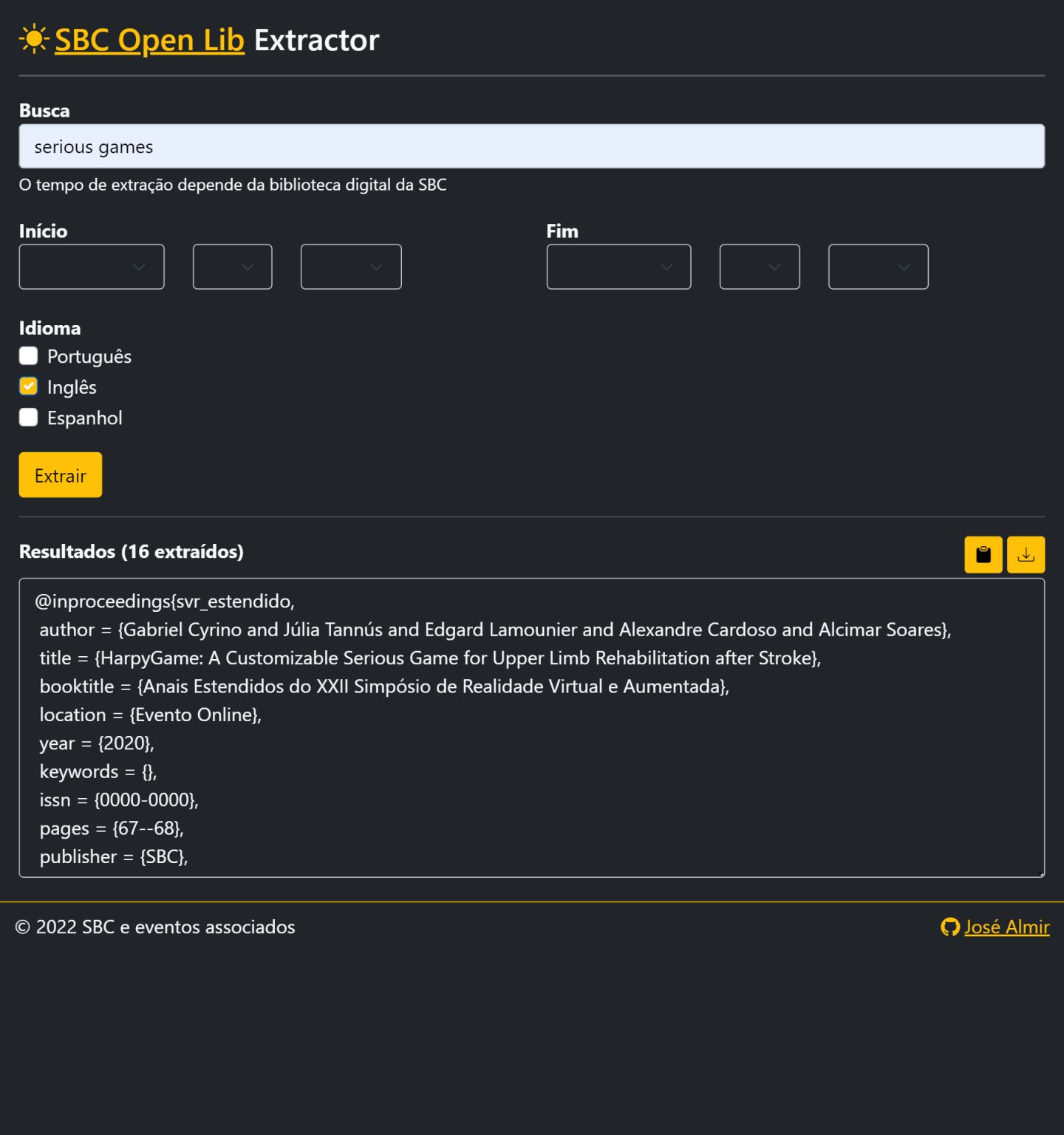
Patented tool for extracting BibTeX references in bulk from SBC Open Lib, reducing manual work in academic research.
Public case
AngularExpress.jsWeb ScrapingBibTeX Automation
Automating metadata collection from a source not designed for batch processing while preserving consistency and speed.
Researchers could generate references in bulk within seconds, with less manual error and less operational effort.
Concrete signals from this case
- The solution processes batches of more than 200 papers in a few seconds.
- Designed the interface for upload and extraction progress tracking.
- Implemented scraping tailored to the dynamic structure of SBC Open Lib.
- Normalized extracted data directly into BibTeX, ready for LaTeX workflows.
I created SOL-e to solve a very specific academic research pain point: turning manual reference collection into a fast, repeatable workflow with fewer errors. The system was later recognized with a patent for addressing a real productivity bottleneck in the university context.
Context
Before the tool, researchers had to manually copy information from SBC Open Lib to assemble BibTeX files. That process was slow, exhausting, and error-prone, especially for larger reading lists.
My role
I built the product end to end, including the interface, API, scraping logic, and final reference formatting. The work involved UX decisions as well as automation and data-processing engineering.
Technical decisions
- Simple academic UX: prioritized a direct flow for list upload and processing feedback.
- Resilient scraping: adapted extraction to the dynamic library structure to keep the output reliable.
- Transformation pipeline: converted extracted data straight into BibTeX to reduce user rework.
- Batch processing: designed the solution to handle large article sets efficiently.
Observed outcome
The time spent on bibliographic referencing dropped sharply in heavy-use scenarios. Instead of copying items one by one, users could generate ready-to-use files in seconds and spend more time on reading and scientific writing.
Visual references